Ogden Valley Has a Watershed Plan. Here’s What It Means.
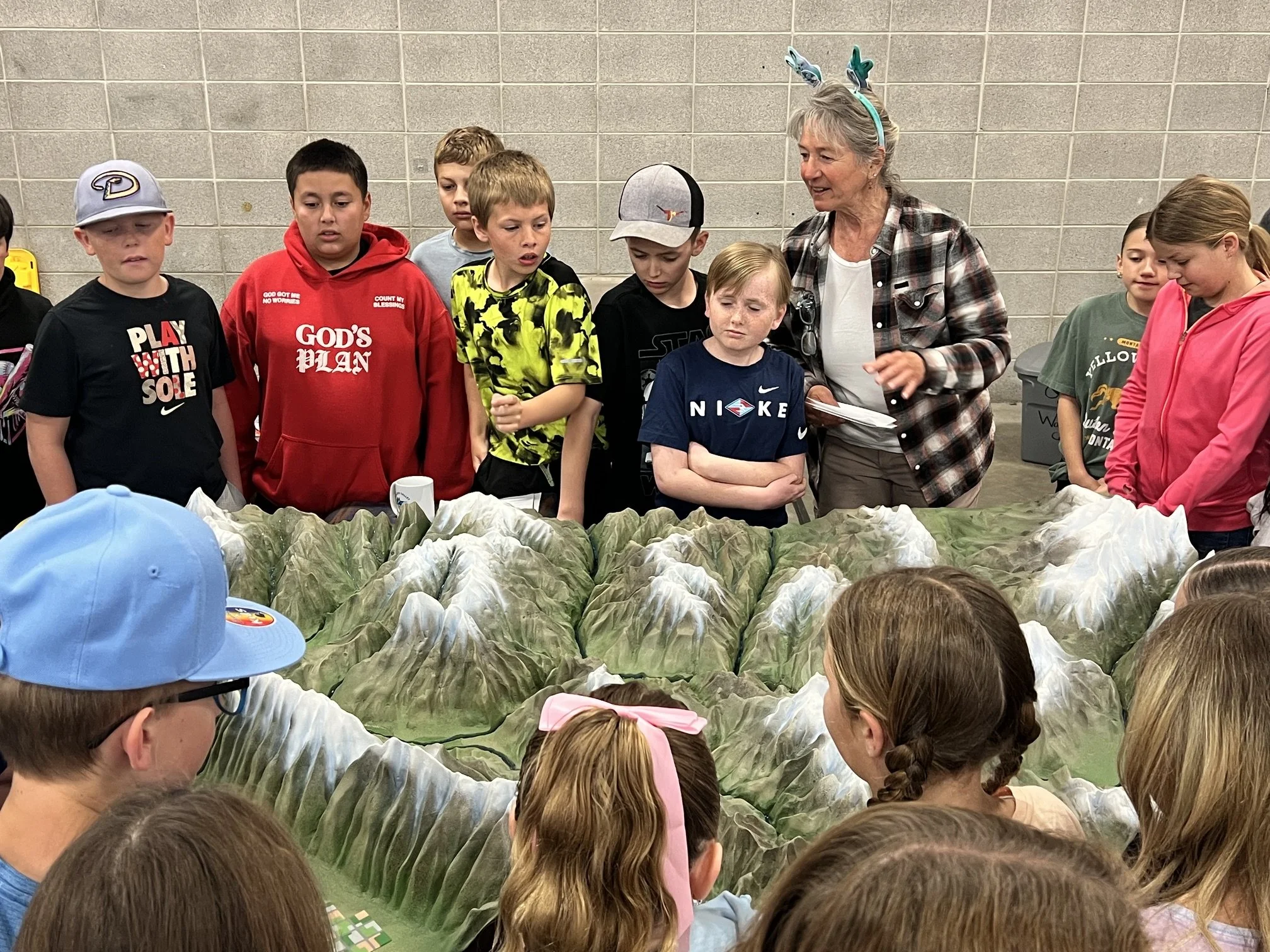
Trina White a volunteer with OVWAG, teaches local 5th grade students about the Weber River watershed during the Golden Spike Stormwater Coalition Water Fair.
(as submitted to the Ogden Valley News)
Part 3 of an educational series on protecting Ogden Valley’s water.
Ogden Valley already has a federally recognized watershed plan in place called the Ogden River 9-Element Watershed Plan (2023). The document serves as the valley’s watershed roadmap — a structured plan that connects science, measurable goals, and practical actions to improve water quality in the Ogden River and Pineview Reservoir.
So what exactly is a 9-Element Plan, and what does it do?
What Is a 9-Element Plan?
A 9-Element Plan is a watershed planning framework recognized by the U.S. Environmental Protection Agency under the Clean Water Act. These plans are developed in watersheds where certain water-quality standards are not fully being met.
In the Ogden River watershed, Pineview Reservoir and all three forks of the Ogden River — North, Middle, and South — are listed as impaired, primarily due to nutrient-related impacts.
“Impaired” does not mean unsafe or unusable water. It simply means monitoring shows that improvements are needed over time to fully meet long-term water-quality standards. Many watersheds across the country operate under similar long-term improvement plans.
The 9-Element Plan outlines how those improvements can occur in a measurable and coordinated way.
What the Plan Does
In practical terms, the watershed plan serves four main functions.
First, it defines the challenge using monitoring data and watershed modeling to identify where nutrients and sediment originate and how they move through the landscape.
Second, it sets measurable reduction targets so progress can be tracked over time.
Third, it identifies voluntary best management practices that can reduce nutrient and sediment movement across the watershed. These include actions such as irrigation improvements, stormwater management, riparian restoration, construction runoff controls, and septic system education.
Finally, the plan qualifies the watershed for Clean Water Act Section 319 funding, allowing federal grants to support voluntary projects, restoration work, and education efforts.
In short, the plan defines the challenge, sets measurable targets, outlines solutions, and tracks progress over time.
What the Plan Does Not Do
The 9-Element Plan does not change zoning, mandate sewer systems, or impose land-use regulations on its own.
Instead, it provides scientific guidance and an implementation framework. How that information is used depends on local decisions, community priorities, and voluntary participation.
Why It Matters
As Ogden Valley continues long-term community planning and infrastructure discussions, the watershed already has a science-based foundation in place. The 9-Element Plan identifies priority areas, outlines potential solutions, and establishes clear goals for improving water quality.
Water quality improvements rarely happen through one large project. More often, they occur gradually — through many small improvements across farms, neighborhoods, construction sites, roads, recreation areas, and public lands.
Over time, these incremental improvements can reduce nutrient and sediment inputs, improving conditions in Pineview Reservoir and the Ogden River system and supporting eventual removal of impairment listings.
Education and Community Involvement
Education and outreach are required components of every EPA-recognized 9-Element Plan.
In the Ogden River watershed, that role is supported in part by the Ogden Valley Watershed Action Group (OVWAG) — a volunteer-led community effort focused on helping residents understand watershed processes and voluntary practices that support long-term water quality improvement.
Looking Ahead
Future articles in this series will explore practical ways residents can help protect water quality in Ogden Valley — including community observation efforts, septic system stewardship, construction runoff awareness, agricultural practices, stormwater management, and Pineview Reservoir.
Understanding the watershed plan provides the roadmap. The next step is understanding how everyday actions across the valley can help move the watershed toward those water-quality goals.
Residents who would like to learn more are welcome to attend OVWAG’s community meeting held on the third Thursday of each month at 6:00 p.m. at the Huntsville Library, visit ovwag.com, or contact info@ovwag.com.
Preserve. Protect. Restore.
Because the health of our water reflects the care of our community.