Understanding Our Watershed: How Water Moves Through Ogden Valley
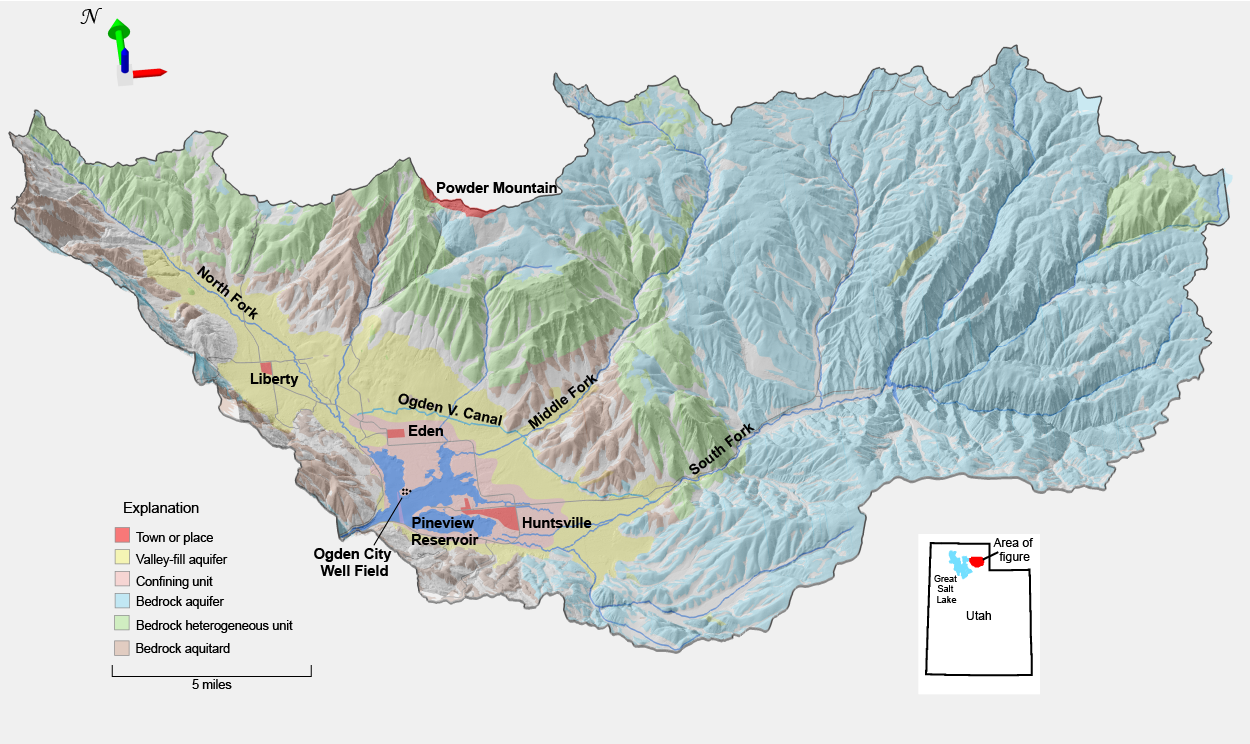
Image Credit: 2019 Characterization of the Groundwater System in Ogden Valley, Weber County, Utah, with Emphasis on Groundwater-Surface-Water Interaction and the Groundwater Budget (2019)
(as submitted to the Ogden Valley News)
Part 2 of a series on protecting Ogden Valley’s water, presented by the Ogden Valley Watershed Action Group (OVWAG).
When we talk about protecting water in Ogden Valley, we often hear the word watershed. It can sound technical or abstract. In reality, it describes something very practical: how water moves across the land we all share.
A watershed is simply the area of land where rain and snowmelt drain downhill into a common body of water. In Ogden Valley, that shared destination is Pineview Reservoir and the Ogden River system.
But the journey water takes to get there is what makes our watershed unique.
From Snowpack to Streamflow
Each winter, snow accumulates in the Wasatch Mountains surrounding the valley. That snowpack acts as a natural storage system. When temperatures warm in spring, melting snow begins to move downhill — first slowly through soils and vegetation, then more visibly in creeks and rivers.
Snowmelt and rainfall travel across forests, open space, farms, roads, and neighborhoods before reaching the North, Middle, and South Forks of the Ogden River. These forks, along with smaller tributaries, irrigation return flows, and groundwater, form the backbone of the valley’s watershed.
Water does not move all at once. Some flows quickly across the surface during storms. Some soaks into the ground and moves more slowly underground. Some is temporarily stored in wetlands, meadows, or irrigated fields before continuing its path.
All of it is connected.
Surface Water and Groundwater: A Two-Way Relationship
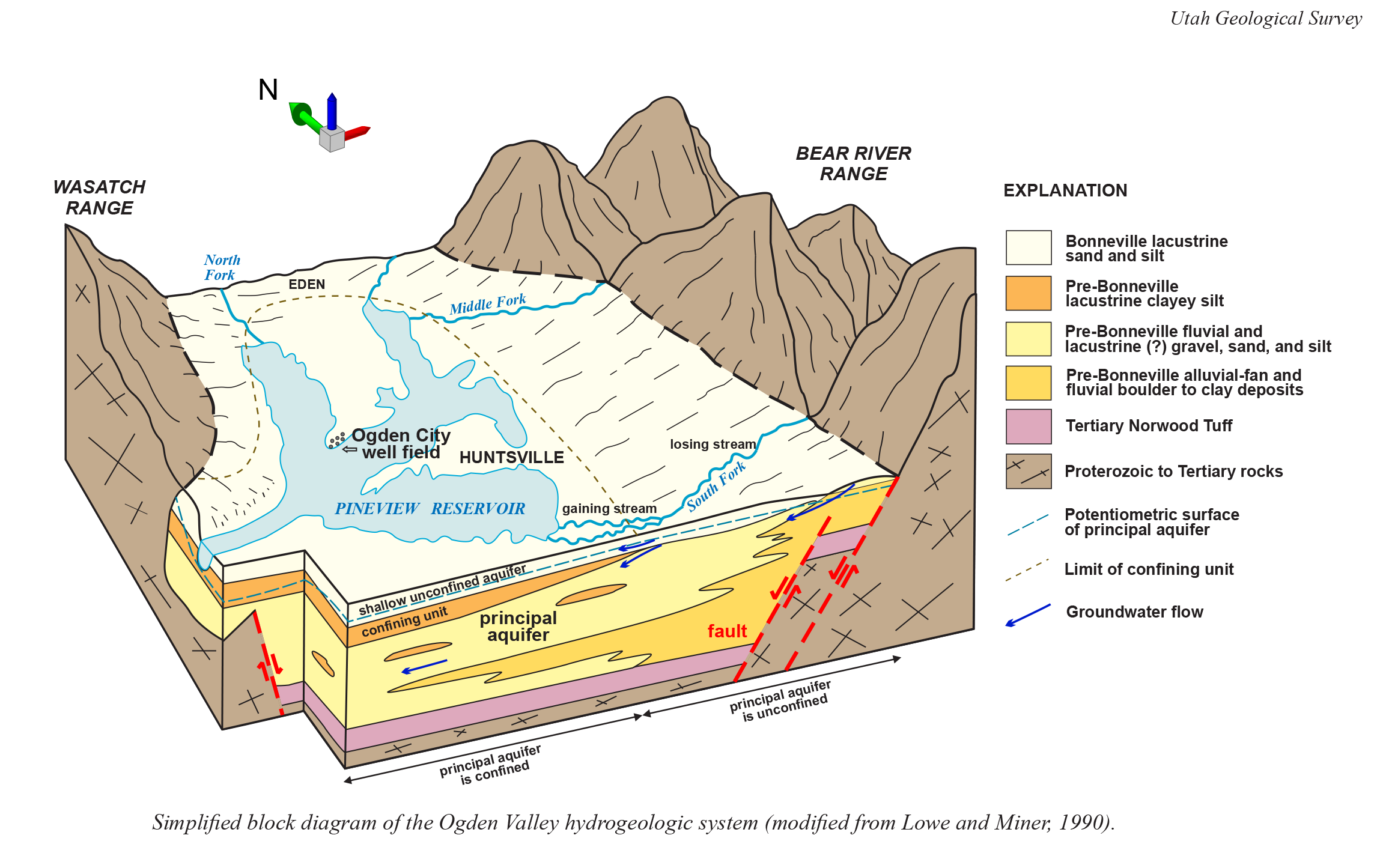
Not all water we see in streams began as visible runoff. A significant portion of streamflow in Ogden Valley comes from groundwater.
When snowmelt and rain soak into the soil, they recharge the aquifer beneath the valley floor. That groundwater supplies many private wells and also feeds springs and sections of local creeks.
In some areas, streams lose water into the aquifer. In others, groundwater flows back into streams — especially during drier months. This two-way exchange means surface water and groundwater cannot be viewed separately. What affects one often affects the other.
Because of this connection, land-use decisions — such as how soil is managed, how runoff is handled, or how development occurs — can influence both visible waterways and underground water supplies.
A Watershed Is More Than a Drainage System
It can be tempting to picture a watershed as a set of pipes moving water from point A to point B. In reality, it behaves more like a living sponge — absorbing, storing, filtering, and slowly releasing water over time.
Healthy soils and vegetation slow water down and allow it to soak in. Forested slopes reduce erosion. Wetlands help filter sediments and nutrients. Well-designed infrastructure directs runoff safely without overwhelming natural systems.
When land is disturbed or soils are left exposed, water can move faster across the surface. Faster-moving water can carry more sediment and nutrients, which accumulate downstream.
Over time, many small contributions across a landscape shape overall water quality.
Why This Matters in Ogden Valley
The North, Middle, and South Forks of the Ogden River are currently listed as “impaired” by the Utah Division of Environmental Quality for nutrient-related effects. This designation does not mean the water is unusable or unsafe. It means the watershed is being actively managed to meet state water quality standards and to protect Pineview Reservoir.
Pineview serves multiple roles: recreation, irrigation, and downstream water supply. Because water from across the valley ultimately flows into the reservoir, watershed management happens at a landscape scale rather than stream by stream.
That landscape includes ski areas, neighborhoods, agricultural lands, forests, roadways, and open space. Each contributes in different ways to how water moves and what it carries.
Seasons Shape the Watershed
Water movement in Ogden Valley changes with the seasons.
Spring snowmelt can bring high flows and increased runoff. Summer irrigation influences groundwater recharge and streamflow patterns. Late summer often brings lower flows, when groundwater contributions become especially important. Fall storms can mobilize sediment after dry periods.
Understanding these seasonal shifts helps explain why water quality discussions often focus on long-term trends rather than single events.
A Shared Responsibility
Protecting water quality does not require eliminating recreation, agriculture, or development. It requires understanding how connected everything is.
Because water flows downhill and underground, actions in one part of the valley can influence conditions elsewhere. That connection is not about assigning blame. It is about recognizing shared responsibility.
When soils are protected, runoff is managed thoughtfully, and infrastructure is maintained, the watershed functions more naturally and more resiliently.
Understanding how water moves through Ogden Valley is the first step toward protecting it.
Looking Ahead
This article is part of an ongoing educational series from the Ogden Valley Watershed Action Group (OVWAG), a volunteer-led community group working to preserve, protect, and restore Ogden Valley’s water resources.
OVWAG meets on the first and third Thursday of each month at 6:00 p.m. at the Huntsville Library. Community members are welcome to attend and learn more.
Future articles will explore community observation efforts, septic systems, construction and erosion, agricultural practices, stormwater runoff, and Pineview Reservoir — helping residents better understand how everyday activities influence the watershed.
To learn more about OVWAG, visit www.ovwag.com or email info@ovwag.com.
Preserve. Protect. Restore.
Because the health of our water reflects the care of our community.