Working Lands, Clean Water: Start With a Question
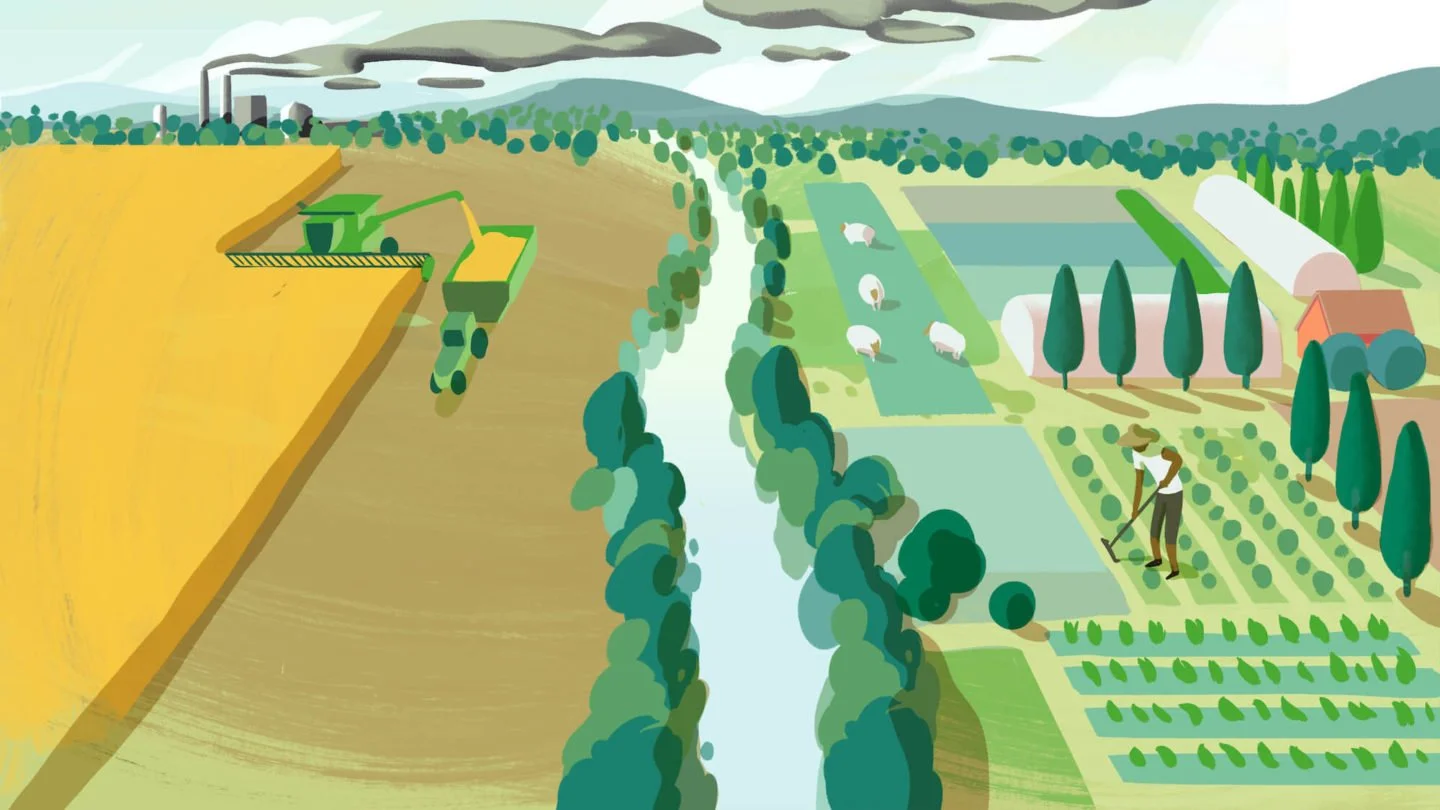
Agriculture and working lands are an important part of Ogden Valley. Pastures, hay fields, livestock operations and small farms help define the landscape and preserve much of the open space we value.
They are also part of the watershed.
Rain, snowmelt and irrigation water move across the landscape, connecting fields, pastures, corrals, roads, ditches and streams—and eventually Pineview Reservoir. Along the way, moving water can pick up soil, nutrients, manure and other material.
Understanding those pathways is one of the simplest ways to begin thinking about water quality.
Follow the Water
During irrigation, a summer storm or spring snowmelt, take a look at where water moves across a property.
Does clear water entering a field leave muddy? Does runoff cross a feeding or heavily used livestock area before entering a ditch? Is soil being carried from a field, road or streambank? Does water flow directly toward a creek or drainage? Are there grassy or vegetated areas that slow it down before it reaches the water?
These observations can reveal where soil and nutrients are being kept on the land—and where relatively small changes might make a difference.
The basic idea is simple: slow the water, keep soil covered and keep nutrients where plants can use them.
Vegetation is one of the most useful tools. Grass, shrubs and other plants along streams, ditches and drainage areas can slow runoff, trap sediment and help stabilize soil and streambanks.
Around livestock areas, another useful principle is to keep clean water clean. Where practical, runoff from roofs, hillsides or roads can be directed around corrals, feeding areas or other heavily used ground instead of flowing through them.
Irrigation management can help as well. Water leaving a field may carry soil and nutrients with it, so paying attention to irrigation rates, erosion and where excess water goes can benefit both the agricultural operation and downstream water quality.
Other conservation practices may include livestock watering systems away from streams, managed stream crossings, fencing, improved grazing practices, erosion-control work or changes in how manure is stored and applied.
There is no single solution that fits every property.
Start With What the Soil Needs
Sometimes the first step is even simpler: find out what is already in the soil.
Utah State University provides agricultural soil testing that can help identify nutrient levels, pH, salts, organic matter and other conditions important to plant growth.
That information can help producers better match fertilizer or manure applications to what a crop actually needs.
For the producer, that can mean making better use of inputs that cost money. For the watershed, it can also reduce the opportunity for excess nutrients to leave the field in runoff.
The same principle applies throughout conservation work: understand the property first, then decide what—if anything—needs to change.
Help Is Available
Landowners do not have to figure all of this out on their own.
Utah has a network of conservation districts, agricultural specialists and federal and state programs that work with farmers and ranchers on soil, water, grazing, irrigation and other natural-resource concerns.
A conservation specialist can help a producer look at how water moves across a property, discuss the landowner's goals, identify possible conservation practices and determine whether technical or financial assistance may be available.
Depending on the property and project, assistance may be available for improvements such as livestock watering systems, fencing, irrigation improvements, grazing management, erosion control and other conservation work.
Importantly, a landowner does not need to know which program or practice is appropriate before asking for help.
The conversation can simply begin with a question.
Could I manage this area differently?
Would a soil test be useful?
Is there a way to reduce erosion here?
Could I improve how water moves across this pasture?
Is assistance available for an improvement I have been considering?
Every operation is different, and the best conservation solutions are those that work for the landowner as well as the land. Local conservation specialists can help producers explore practical options that fit their goals and their property.
For landowners in Weber County, local help is available.
For questions about runoff, water quality, erosion or potential watershed projects, contact Emily Bishop-Valles, Watershed Coordinator with the Utah Department of Agriculture and Food, at ebishop@utah.gov.
For broader agricultural conservation questions, programs and resources, contact Parker Wayment, UDAF Zone 2 Resource Coordinator, at pwayment@utah.gov.
Either can help landowners identify appropriate technical or financial resources.
Upcoming Opportunity: Headwaters Restoration Workshop
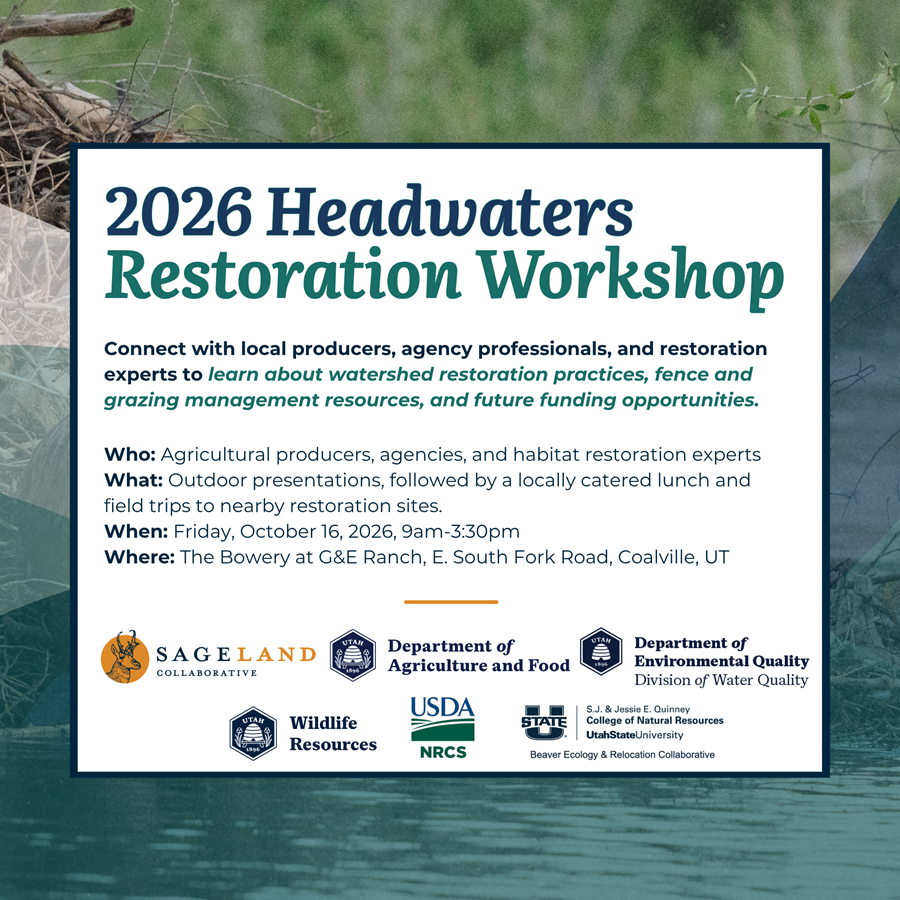
Landowners and agricultural producers interested in learning more may also want to attend the 2026 Headwaters Restoration Workshop on Friday, October 16, from 9:00 AM–3:30 PM at the Bowery at G&E Ranch near Coalville.
The free workshop will bring together local producers, agency professionals and restoration experts to discuss watershed restoration practices, fencing and grazing-management resources, and future funding opportunities, followed by field trips and hands-on activities.
Learn more and register: sagelandcollaborative.org/2026-headwaters-restoration-workshop
The Ogden Valley Watershed Action Group can also help residents and landowners find watershed information and connect with the right local resources.
Protecting water quality does not always begin with a large project. Sometimes it begins by watching where the water goes—and asking a question.
Learn more about the Ogden Valley Watershed Action Group at ovwag.com